


What is a Sausage-Style Sealant Filling Machine and How Does It Work?
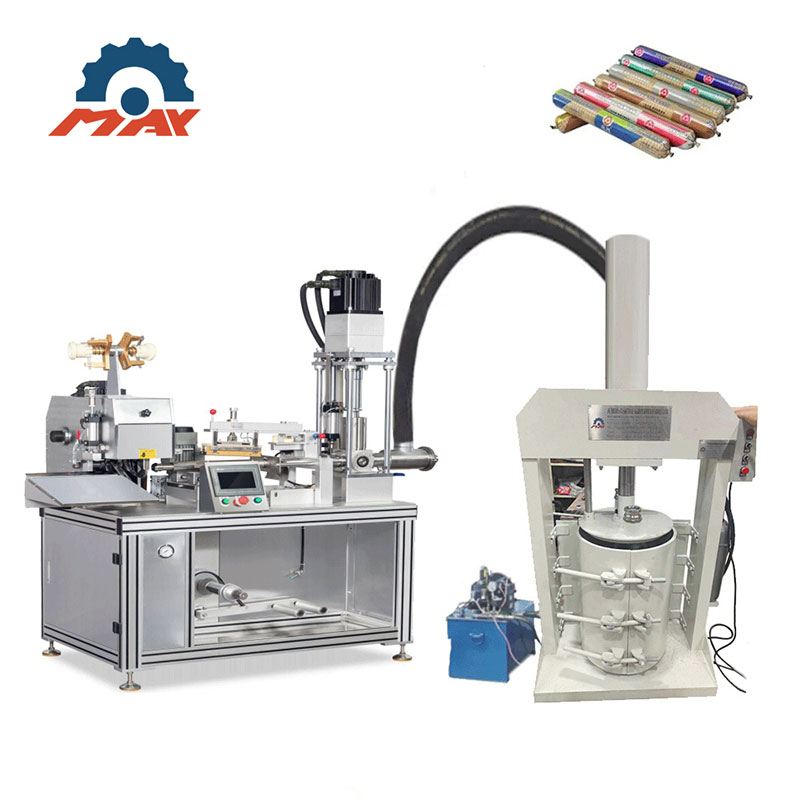
Q: What exactly is a "sausage-style" filling machine, and what is it used for?
A: A sausage-style filling machine, like the Maxwell MAX-RJ-1, is a specialized piece of industrial equipment designed to package highly viscous pastes and sealants into a flexible, tubular film—much like how sausage meat is encased. This packaging format is commonly referred to as a "sausage pack" or "chorizo pack." The primary application is for materials that are too thick for standard liquid filling but need to be dispensed conveniently. This includes silicone sealants, polyurethane (PU) sealants, MS sealants, and various adhesives used in construction and manufacturing. The machine automates the entire process, from creating the film tube to filling, sealing, and cutting it into individual units.
Q: How does the automatic filling and sealing process work?
A: The process is a seamless, four-step integration of functions that were traditionally done on separate machines. It all happens on one continuous line. Here is a breakdown of the workflow, as detailed for the Maxwell MAX-RJ-1 and MAX-RJ-1A models:
| Step | Process | Description |
|---|---|---|
| 1 | Flexible Bag Making | The machine takes a roll of packaging film and forms it into a continuous tube. The film is typically 152-164mm wide and 0.05-0.07mm thick . |
| 2 | PLC Precision Filling | The sealant is pumped into the formed tube. An advanced PLC (Programmable Logic Controller) system controls the filling volume, which can be precisely set between 300ml and 600ml with an accuracy of ≤ ±0.5% . |
| 3 | Double-End Sealing | Once filled, the tube is sealed at both ends. It can use a "Great Wall clip" (e.g., 15-8 size) to create a firm, airtight seal . |
| 4 | Automatic Cutting | The continuous sealed "sausage" is then automatically cut to the predetermined length, creating individual, ready-to-use or sellable products. |
This integrated process replaces the older, segmented method of making the tube, filling it, and then clipping it separately, which saves time and reduces production errors.





